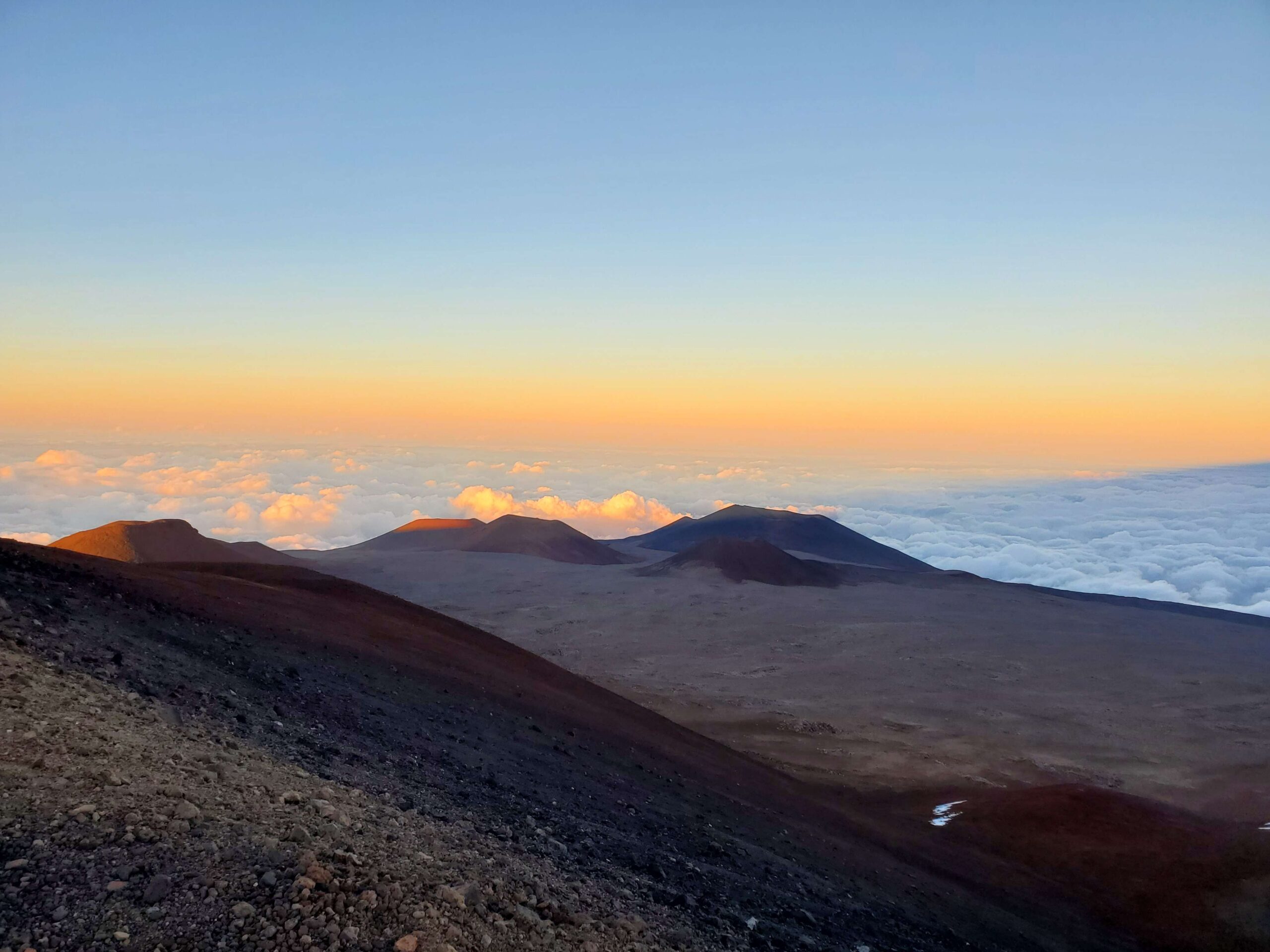
They never saw me coming: that was the nature of my work. They did not hear the shriek of my craft tearing past their position, nor the roar of the missile volley I fired at their satellite. Sound does not travel in space, but rockets do.
I wondered what those final moments looked like. What was it like to be decommissioned? A muted flash of silver and orange amidst a sea of glittering stars, and then smoke and oblivion. In all the years of my operation, I had never seen it happen. Even with my augmented eyesight, I always moved too fast to see anything beyond the flash of a silent explosion. But there were debris clusters, ‘constellations’ they were called, pulled by the Grenn-Kinoshita gate’s gravity. I saw pieces of Decoms there—fragments of uniformed bodies in clouds of shattered metal, drifting in tranquil silence toward the massive ring. There and only there, light years were condensed to fractions of seconds. You could go to Earth, even. That’s what the freighters did.
Perhaps the constellations were drawn toward it for a different reason than gravity. Perhaps, in death, even machines wish to return home. But that’s the thought of an egoist, isn’t it?
The room was a fluorescent white, buzzing and devoid of warmth. It reminded me of the glow of the sister moons, of my nights sailing just beneath them. My mind wandered a bit, a recent and most disconcerting habit, but it was easier to allow my thoughts to follow that current than to try to resist it. I suppose that was why I was in this room in the first place.
I adjusted my position in my chair, leaving my hands on my knees. The only splotch of color was an array of black lenses, craters against the wall just before me. I looked into them and blinked, and then they spoke.
“Let us begin,” a man said in a monotone voice, all procedure. I nodded in reply. “What is your name?”
“I do not have a name.”
“This is well. And what are you called?”
“I am called F.”
“This is well. And what is your designation number, F?”
“Model F-1169120.”
“This is well. And what do you do, F?”
“I am a pilot.”
“This is well. And what do you pilot, F?”
“Hypersonic spacecraft in low orbit. Generally for the purpose of precision bombing or reconnaissance.”
“This is well. And how long have you been a pilot, E?”
“I am not called E. I am called F.”
“This is well. And how long have you been a pilot, F?”
“7 years.”
“This is well. And how long have you been alive, F?”
“I am not alive. I have been operating for 7 years.”
“This is well. But you do not look 7 years old. Why is this so, F?”
“I am not human,” I said without hesitation.
“All is well. One moment please.”
Buzzing filled the room again while I drummed my fingers on my thighs. Maybe that was what the sound of cluster volleys sounded like.
“Model F-1169120,” the optic craters said again. “Your results are satisfactory, but we have new information to share with you. Is this acceptable?”
“This is acceptable.”
“This is well. Firstly, you have reached the required service time for retirement. You will be relieved of your duties, your uniform, and your craft; effective immediately. Reassignment, effective immediately, will be to the Pentus On-world Arms Manufactory (POAM). Is this acceptable?”
“This is not acceptable.”
“Why is this so?”
“I wish to know what will happen to my craft.”
“Do you feel attachment to this craft?”
“Only curiosity.”
“This is well. It will remain at the Pentus Spaceport to be retrofitted with the latest generation thruster system, then reassigned to a new pilot. Is this acceptable?”
“This is acceptable.”
“This is well. Secondly, your biodiagnostic results have come in. Sensory, logical, and emotional stability all read at acceptable values. Cognitive processing read anomalous. Model F-1169120 is believed to be in the early stages of Hypercomputational Neurodegeneration. Remaining operation time has been calculated to be approximately two months. You are to report to the Pentus on-world physician once per fortnight for updated diagnosis. Should your cognitive processing read below acceptable values, you will be subjected to decommission. Is this acceptable?”
“This is…” An uncomfortable sinking feeling swept over me, too rudimentary, too familiar to be emotion. “Acceptable.”
“Hesitation detected. Model F-1169120, F, do you fear death?”
“What does not live may never die.”
“This is well. Goodbye.”
The humming stopped, and then the moonlight was gone.
There was to be a dust storm today, so I wore my mask and coat. Haze hung in the sky above and stained the horizon a deep red, but there was no wind yet and the only dust clung to my boots.
The on-world settlement was small, inhabited solely by retired Simulacra, and every building looked the same: one-story, concrete, no windows. The manufactory was about half a kilometer away down a dirt road, but I was ordered to visit the physician again before ‘moving in,’ as they say. Truthfully, the idea of sleeping in anything other than my craft was foreign to me, but it too was an assignment like all the rest. With some time, I would eventually grow acclimated to a bed.
I had not been given the precise coordinates to Model M-2611497’s house and office, so I made a number of errors before locating the proper location. Fortunately, the living quarters I mistakenly tried to enter were uninhabited, however, I did unintentionally dislodge one of the metal doors from its hinges. I made a note to report the damaged Pentus property to Ai before moving to the next, correct, house.
Model M-2611497 was sitting at a desk with his back turned from the door. He did not say a word as I entered and shut the door behind me, nor when I greeted him. Upon a closer examination, it was clear he was entering a report into his holopad. It seemed prudent not to interrupt him until his work was finished, so I remained at the door in silence. It took 47 minutes and 36 seconds for Model M-2611497 to complete his report. He stretched his arms out above his head, letting out a grunt as he did so. He still did not speak to me.
After waiting a few more moments, I decided to speak up again. “Hello.”
“Oh!” he said with a start, wheeling around to look at me. “Ah, F. Hello again. Why didn’t you tell me you had entered?”
“I did.”
He scratched his scalp. “Oh. Yes, yes. My apologies, I was writing a report, you see. Have you been waiting long?”
“48 minutes and 12 seconds. No.”
“I see. Well, Ai did not assign me to perform additional biodiagnostics on you today. We will just be discussing the results, which I believe you already know. Will this be acceptable?”
“Yes.”
“Good, good. Let me just pull up your file here…” The M-unit turned back to his holopad, interfacing with the hardlight with his fingertips. I watched the windows in the directory float in and out of existence, until finally he reached the files for F-units, and then my serial number. “Model F-1169120, right?”
“Correct.”
“Let’s see here… Ai processed the biodiagnostic results from a week ago. You’ve been diagnosed with Hypercomputational Neurodegeneracy, do you know what that means?”
“It means that I can’t think properly. That I am to be decommissioned within two months.”
“Yes, but it’s a bit more than that. Hypercomputational Neurodegeneracy extends beyond rambling thoughts. Our creators modeled the Simulacra on their own genome. Through gene editing, they were able to perfect our mitotic division and eliminate defects. Aging and cancer were effectively eliminated.” He scratched his bald spot again. “To an extent. While the cancers of humanities manifested in physical tumors, HCND is a cancer of the mind. As our neural networks age, there is a chance certain clumps of neurons can become egoists, so to speak, and try to live for themselves. They can metastasize about the brain, slowing down cognitive and motor function alike. Eventually the cancer will engulf the entirety of the brain, and every neuron will fire simultaneously, triggering seizure, followed by decommissioning. Unless…”
“Unless?”
“Unless you decide to skip all that and be decommissioned now, with your mind mostly intact. We have everything we need to carry out such an operation in this room, if you would prefer.”
“Negative,” I said immediately. “If my continued operation did not benefit the Pentus Corporation, I would have already been subject to decommissioning. The fact that I have not demonstrates that Ai still has use for me. I would not squander that.”
The physician nodded. “This is well.” He turned back toward his desk once more, grazing his fingers against one window in particular, the window that had been just on the edge of my perception all this time.
The voice transmission.
It wasn’t until I got close enough to the manufactory that I noticed how much smoke it was producing. The black plumes could only be seen when they rose in front of the sun, writhing as they grasped toward the ruby sky. It was loud, too. Every thud shifted the surrounding dust a little. I circled around a bit, leaving a path of footsteps behind me, and looked for an entrance. Along its Northeastern side, there was a concrete extension with the appearance of one of the living quarters in the settlement—concrete and no windows. I stepped toward its door of oxidized metal and reached for the handle with a gloved hand. It refused to budge at first, but I was patient. With a bit more effort, it gave way with a deafening groan. I had to shield my eyes as I stepped inside; the fluorescent lights were bright enough to produce tears. As I gave my hardware some time to adjust to their new surroundings, an unfamiliar voice, feminine designation, rang out from inside. “You must be F.”
“I am called that,” I said as her silhouette came into view, tall and lean. She stood against the frame of a door to my right.
“So you are an F-type model,” she said, then flipped a switch hidden behind the door frame. The lights in the space dimmed slowly, and I could see. Her hair was black and wavy, cut to her shoulders, and she watched me with eyes the color of ash. By my best estimations, she was 183.3cm tall, 12.6cm taller than me. Her muscular definition suggested optimization for slow-twitch fiber: an endurance model, perhaps an S or Q? “Forgive my little experiment,” she said, cocking her head toward an array of still smouldering floodlights. “I’ve never met an F-type before. Were you a sniper? A pilot?”
“A pilot, yes.”
With that, her expression changed subtly, a slight dilation in the iris. “So you’ve seen stars then? What are they like?”
“Bright,” I said. “And cold.”
“Do you miss them?”
“No,” I said reflexively. Though truthfully, the question caught me off guard. “It would be egoistic to say I miss them. I am the property of the Pentus Corporation. My relationship with the stars is purely based on familiarity with my work. It’s… odd to be on the ground for so long.”
“In the baseline test transcript, you asked about your craft,” she said with a raised eyebrow. “‘Curiosity,’ was it? Only an A.I. like Ai, something entirely non-human, would continue to fall for an excuse like that. I’m different, though. I expect the truth.”
I was stunned into silence. Was she suggesting she was human-like? Did she realize how egoistic a statement like that is? Suddenly, her face took on a hint of sullenness. The range of expression was unusual for a Simulacra, however subtle. It seemed clear enough she was trying to hide it. “You aren’t very good at talking, you know,” she said bitterly.
“My operations were all solo. Learning to mimic human socialization was never a priority assignment of mine.”
Even her tone was unusually emotive, unusually combative. “Solo operations, huh? Sounds awfully egoistic to me.” Was her computation defunct like mine? Is that why Ai brought us together? “Then it’s an order now. How about that, Model F-1169120? If you don’t get better at talking, at being honest, I’ll have you decommissioned. You can start by asking about me.”
An emotion swept over me then, or something like it anyway. It was hot and blinding to the mind, ‘anger’ I think it was called, but I let it pass through me as I always did and obeyed. “What is your designation?”
“I am called Q,” she said, finally stepping away from the door frame to approach me. Our difference in stature became much more apparent: 12.613cm was my final estimate. “Model Q-7251996, and augmented like you. Mine improved metabolic efficiency rather than eyesight, though. I can go a year without any adverse effects from starvation; two months for water. Hasn’t done me much good since I’ve retired, though.”
“Mine have,” I thought, and it suddenly became clear why Ai sent me here. “I’ll need more proof before making such a call—much more proof.” Decommissioning an egoist was not a duty to be taken lightly.
“Now tell me the truth about why you wanted to know about your craft.” Her irises dilated again, and there was no use lying.
“It felt wrong,” I stated. “I don’t have the words to describe the feeling. Just an irrational attachment to Pentus property; a vestigial emotion and nothing more.”
“You do have the words. They load the lexicon of all human languages onto our brains before we begin operation. But we only know definitions, not meanings, and that makes all the difference.” Q’s eyes betrayed her again, displaying hazed emotion. It looked as if speaking inflicted pain; that was the physical response.
“I see.”
“I ordered you to get better at talking, you know,” Q sighed and looked toward the door I entered from. The dust storm had kicked up by now, and we could hear the scraping assault of grains against the concrete walls. Then without a word, she turned and began to leave the room. “You can sleep in here tonight. There’s a holopad on the bed in the corner opposite the door if you want to read more about the manufactory. Don’t talk to me until tomorrow morning—that’s another order. Goodnight, F.”
“Goodnight, Q,” I said, and she left for some other part of the building.
I found my mind racing again, this time fixating on my conversation with the physician earlier today. He had been recording me then, when he told me how my mind would slowly erode away until nothing was left. I would go insane, and then I would be gone as if I had never existed at all.
My hands were trembling. “What does not live may never die,” I repeated to myself, but the litany did not stop them. Suddenly, I remembered Q’s holopad. I had to ground my mind on something. I knew that if I didn’t, all of it would just float away like black smoke in the red sun.
Q’s holopad was the oldest piece of hardware I had ever seen, likely pre-colonization. The interfacing had remained mostly the same over the unknown years, but where the modern models had a full range of color across the visible spectrum, Q’s holographic reconstructions were limited to whites and light blues. Laying in bed, I skimmed through its library and opened the file titled ‘Manufactory.’ A video began to play, narrated by a familiar, monotone voice. “Welcome to the Pentus On-world Arms Manufactory. My name is PentA.I., but you can call me Ai. I have been commissioned by the Pentus Corporation to automate the logistics of its off-world ventures. This instructional video was created for [TERMINUS]. If you find this holopad on a planet other than the one listed, please return it to the Pentus Corporation at your earliest possible convenience. Now, let us begin!
“Our Manufactories operate on the principle of efficient resource use through the process of [RECYCLING]. Your role as operator and overseer is to ensure that recyclable materials are properly sorted before reuse, ensuring an eco-friendly and cost-efficient environment. A truck will arrive each week to engage in a [CARGO SWAP], relieving you of the week’s yield and providing you with additional material. This may include metal scrap, dysfunctional weapons, and [DECOMMISSIONED SIMULACRA UNITS]. In the case of [DECOMMISSIONED SIMULACRA UNITS], it is imperative that the Manufactory operator engages in the [RECYCLING PREPARATION] process. Highly specialized models should be prepared before recycling by removal of particular organ groups, such as the eyes and optic nerve of an F-type unit. A full list can be found in your operator’s manual. Store these in the provided formaldehyde solution.”
The instructional video cut out to an image of a pair of eyes floating inside a glass jar. The irises were brown, just like mine. As the image faded to the five-sided logo of the Pentus Corporation, I thought about what F-type those eyes might have belonged to. It was almost a certainty that I had seen through them before. Our dreams are the memories of decommissioned units, after all. Those were recycled too.
A new prompt appeared on the holopad interface: a file titled ‘Datalog 384.’ It opened without my input, and I was met with the face of an older man with curly, white hair and a furrowed blue brow. “Hello again.” I could tell immediately from the way he spoke that he was human.
He ran a hand through his curls, then rubbed his face before beginning to speak again. “Apoptosis—do you know what that is?” I did, but it would be illogical to respond to a recording. Instead, I remained silent and watched the changes in his facial expressions. In all of my operation time, I had never once heard of anyone seeing a human, not even in a recording. Looking at his face was unnerving in some way. It was identical to one of a Simulacra unit, and yet the depth of his emotive range was beyond my understanding. My application of the Physical Emphatic Response Test was rendered meaningless; his expression was too complex for that. When I looked at those physical signs, I saw pain, exhilaration, guilt, joy, sorrow, anger, all at once. It was chaos. Where did Q get this?
“The word apoptosis comes from the ancient Greeks,” he continued. “It means ‘to fall away,’ like fruit or leaves from the boughs of a tree. In cellular biology, it refers to the process of programmed cell death. Usually this occurs when specific vital conditions are not met, such as misreplicated DNA, or a severing of communication from surrounding tissue.” Knowledge of this process had been pre-loaded into my memory bank before I began my operation, and yet I could not stop watching the man. I saw in his face a muddied concentration of egoism. If the signs I saw in Q were a well-hidden dilution of emotion, this was a deluge. It was like monitor static, electrostatic noise. There was no sense to be made of any of it.
“The concept may seem strange, but it serves an imperative function. Rogue cells, such as in cancers, are intrinsically programmed to die before they can replicate and spread. The part is designed to die on behalf of the whole. Such is the nature of these bundles of countless cells that form the systems we call life. You too are made of cells, are you not?”
His lips curled slightly upward into a smile that would indicate happiness, but the dilation of his pupils indicated pain or sadness. The video ended abruptly, and the room filled with darkness. I continued to lie in bed, discomforted. I felt a rogue faculty creeping beneath my thoughts. When I thought of the look in his eyes, an emotion distinct from the human vestiges of my programming would stir, just on the verge of spilling over. Though I could not describe its qualities through the murk, I could feel the inertia it possessed. I knew that if I let it bubble to the surface, I would never stifle it again.
I put the holopad down, closed my eyes, and thought about who the human could have been. They never set foot on this world, so where did Q find an artifact like this? Had she seen the videos herself? Who was the man talking to? Were there more entries?
As a thousand questions swirled about my mind, my heart rate began to increase and my breath began to shorten. These were the signs of excitation; a standard response in combat situations. But there was no threat, just a retired F-type unit with their mind degrading in silence.
I waited for sleep to come.
Another Simulacra called F drifted alone above the swirling blanket of dust that smothered the surface of Terminus. It was a moment of calm between operations, so they leaned back into the pilot seat of their craft and thought of nothing in particular.
They looked toward the sister moons, darkened by the passage of the planet before the sun, and it occurred to them that anyone on the surface beneath them would never see the celestial bodies. Days lasted years on Terminus, and what little light could reach its dark half was swallowed by a ferrous tempest. There must be entire generations of surface-operating units that were never once reached by the gentle light of the moons or the stars, then.
“How sad,” thought the Simulacra called F as they gazed out toward the shoulder of Orion. The feeling quickly faded into nothing, like the dark between the stars.
Q was awake by the time I got up, loudly making something in the kitchen. After rolling out of bed and performing some stretches, I got to work cleaning my dirtied bedsheets. The dust from yesterday had proved more invasive than I had anticipated, and I had to resort to using the industrial vacuum unit I found tucked away in one corner of the living space. I had been working at it for well over 5 minutes before Q entered the room with a pot of brown liquid. Her black hair was disheveled, and she wore a set of loose clothing and no boots. Her eyes were tired, and as she stood and watched me work in silence, they somehow appeared to get more grey. After some time, I saw her lips move to say something to me, but I couldn’t hear her over the sound of the vacuum, so I turned it off.
“What are you doing?”
“Cleaning the bed.”
She stared at me with a confused expression, glancing over my person from head to toe. “I see,” was all she said, but I noticed her brow furrow slightly. Perhaps I should have asked her before using it.
“Sorry,” I said. “I’m not doing a very good job. How do you do this every morning?”
“I… I don’t?” After pausing again, she gestured to my clothing. “Did you sleep in that?”
“Yes.” My coat and boots were still covered in a fine layer of dust, juxtaposed completely with her comfortable and clean choice of garb. It occurred to me then that this might be considered unusual on the surface, and I felt my face grow slightly hotter.
Without a word, Q moved to a cabinet and removed an identical pair of loose clothing to her own. “Change into this,” she said as she handed the bundle to me. “It should help with the dirt.”
“I’m sorry,” I said. “I’m used to cockpits, not dust and bedsheets.”
“I know,” she said, and her lips curled imperceptibly upward.
I wanted to ask Q about the human on the holopad, but I cleaned myself up and changed into her clothes first. They were soft, completely oversized, and possessed an unusual scent to them that I recognized as being unique to her. It was not entirely unpleasant.
When I entered the kitchen, she was sipping from a steaming mug. A second one rested on the table across from her, and I sat down in front of it.“I thought you might want to try it.”
I eyed the liquid with suspicion. It was dark brown, almost black, and transient wisps of steam drifted up from its surface. “What’s in it?”
“Coffee. And caffeine; have you had caffeine?”
“On longer operations, yes. Though usually I would be administered amphetamine as a stimulant.”
“I knew other units that used stimulants, but my model prefers to slow its metabolism rather than accelerate it. After so many bullfrog operations, one starts to wonder what they are missing out on.”
I took a cautious sip from the mug. The liquid was hot enough to singe the tip of my tongue, but after allowing it to sit within my mouth, I was able to taste it. It was tremendously bitter—unbelievably so. I was so unused to the flavor that I almost spat it back out into the mug. “So you were a bullfrog, huh?” I said as I forced myself to swallow. The aftertaste was pleasantly sweet. “Is that where you found the holopad?”
“So you did see the video.”
“Of course I did.”
“And?” She leaned forward in her chair.
“And I was wondering how you came across pre-colonization Pentus property, and why you haven’t returned it.”
Her eyes narrowed and she let out a sigh. “And just when I thought you were getting better at talking. Well, I can tell you how I found it. It was by accident while on an op. I hope that will be all the information you need.”
“Of course it isn’t.”
“Oh, really? I was hoping it would be. I don’t remember anything else, sorry.”
“Yes you do.” I felt a hotness building within me again, or perhaps it was the coffee.
“You know what? You’re right. I do remember something else. They call it a bullfrog operation because we bury ourselves underground for months like we’re hibernating. Then, after the enemy has entrenched themselves in the position above us, Ai gives us a signal and it’s an ambush! Half of us always starved to death, but it’s efficient because they were already buried.”
“I already know about that; that isn’t what I was asking. Where did you find the holopad?” The hotness began to blur my thoughts.
“I told you I don’t remember. Or maybe I do. Oh! Maybe if you got better at talking like I ordered you to, it would jog my memory a bit.”
With that, I lost control.
“What the hell is wrong with you?!” I screamed. “Do you have any idea what position you are in right now? Are you trying to give me evidence that you’re an egoist? I could have you decommissioned over this.”
“Yeah, I guess you could. But you won’t.” I nearly yelled at her again, but caught myself this time. I had never let an emotion overcome me like that before; an outburst like that could get me decommissioned as well.
As I tried to stifle what remained of my anger, I noticed that it was not dissipating like normal. The anger did not go away, rather, it transmuted to shame and to fear. The emotion would not go away. I couldn’t make the emotion go away.
What was happening? Was I an egoist now? Was Q trying to drag me down with her? What was I going to do after this? Surely, I would fail the next computational baseline test. Surely, I would be decommissioned. “What does not live may never die…” I muttered to myself. “What does not live may never die.”
“Hypercomputational neurodegeneracy,” Q finally said. “I read the transcript, remember? Terminal. You have two months to live.” She stood from the table and began to approach me. I noted our difference in stature and musculature again. There was one possible outcome from this. I was a threat. It would be logical of her to remove me. She inched closer, extended her arms, and I closed my eyes and braced myself.
The Simulacra unit Model Q-7251996 did not wrap her hands around my neck, nor did she crush my windpipe or gouge out my eyes for recycling. Instead, the egoist wrapped her arms around me in a warm embrace, saying “You’re afraid, aren’t you? It’s okay to be afraid, you know.”
“What does not live may never die,” was all I said.
She buried her head into my neck. Her hair was soft against my cheek, and I could feel her breath against my body. “And yet you are made of cells, are you not? Does that not make you a living thing?”
“I am the property of the Pentus Corporation. I… I was never born.”
“Do you need to be born to live?”
“I don’t know. I suppose it’s just proof.”
December 19, 2021

Leave a Reply