About 6 months ago, I finally read Crime and Punishment by Fyodor Dostoevsky. I could write a series of separate essays analyzing its themes, but here I will focus on the motif I found most singularly resonant: the image of a cramped and squalid room. Raskolnikov spends much of the novel in his tiny apartment, agonizing over his guilt and wrestling with his spiritual need to confess his sin. His room, a place that should, by all accounts, be considered his home is actually closer to a prison cell. He does not live in it, he languishes in it.
There is, of course, a moral component to this. Raskolnikov’s suffering is a consequence of his own actions, of being a murderer. It is punitive. In No Longer Human, Osamu Dazai wrote that the opposite of crime is not justice, but punishment. I believe they are antonyms in the same way day and night are, not merely opposites, but also sequential components of the same process. The pairing of crime and punishment evokes the idea of the criminal justice system, where the crime was committed against an external legal framework, the state, and the punishment, imprisonment, is imposed by the same framework. Raskolnikov’s crime was in violation of the law and the state does eventually imprison him, but this is irrelevant. The titular crime is the one Raskolnikov committed against himself existentially, destroying and betraying himself for nothing, and his punishment is of his own making and imposition. He frees himself through his confession, and even when condemned to labor in Siberia, he is freer than he ever was in the prison cell of his apartment, trapped in his own wounded morality. Justice to himself is not the antonym of his crime, it is the summation of the sequence of crime and punishment.
Justice is a loaded word. If an outcome is just, it is implied that it was deserved, and this is an idea I approach with a great deal of skepticism. The passage I found most disturbing in the novel was not the gruesome murders carried out by Raskolnikov, but an exchange in Part Four, Chapter 1 between Raskolnikov and the abhorrent, unrepentant Svidrigailov. I will include it below (my copy is the David McDuff translation):
“…If you believe in a life to come, you ought to be able to believe in that argument, too.”
“I don’t believe in a life to come,” Raskolnikov said.
Svidrigailov sat looking pensive.
“And what if there’s nothing there except spiders, or something of that kind?” he said suddenly.
“This is a madman,” Raskolnikov thought.
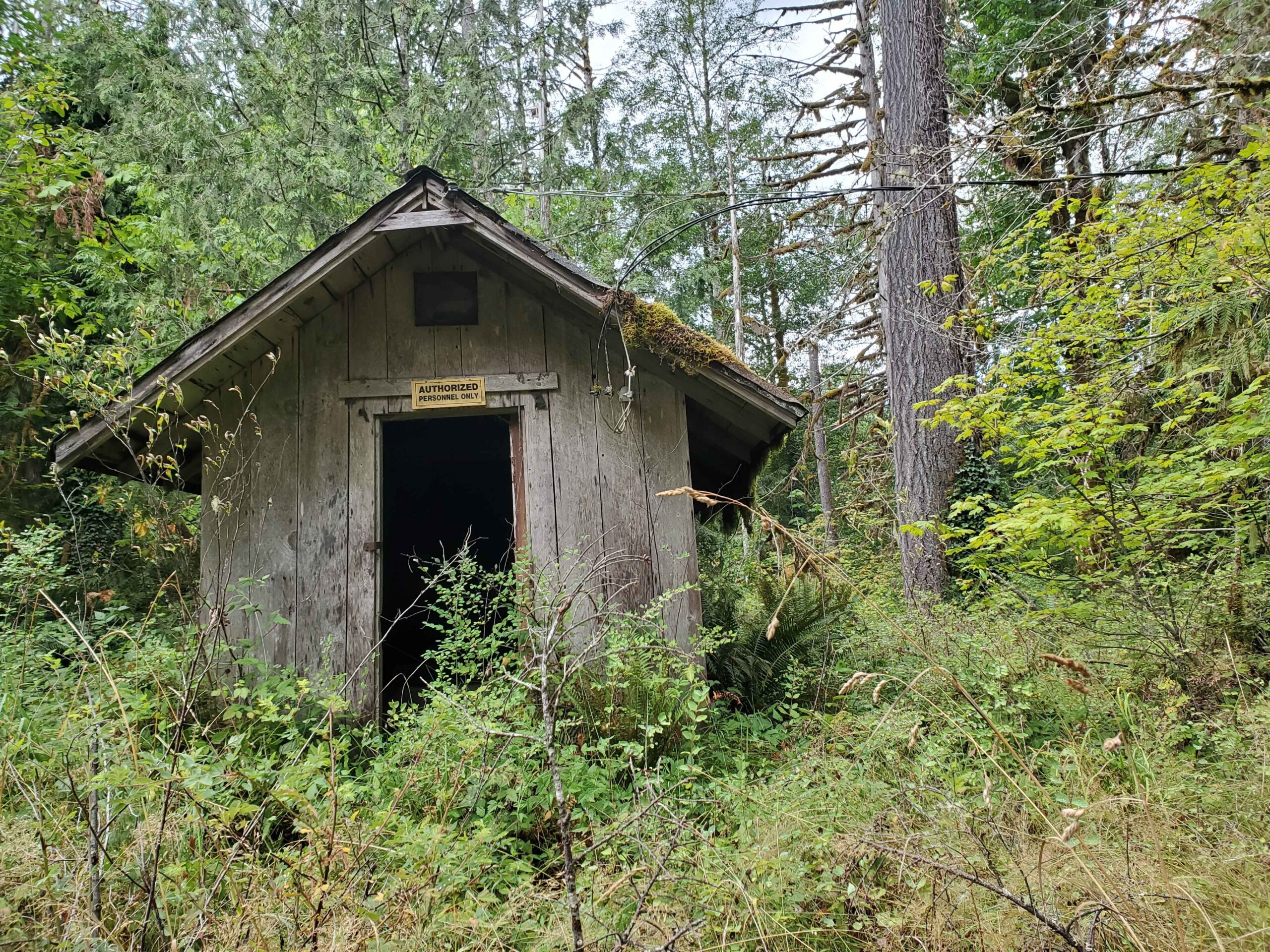
“You see, we always think of eternity as an idea that can’t be comprehended, as something enormous, gigantic! But does it have to be so very large? I mean, instead of thinking of it that way, try supposing that all there will be is one little room, something akin to a country bath-house, with soot on the walls and spiders in every corner, and there’s your eternity for you. You know, I sometimes see it that way.”
“Can you really, really not imagine anything more just and consoling than that?” Raskolnikov exclaimed with a feeling of pain.
“Just? But who knows, perhaps that’s exactly what it is – just, and you know, if I’d been given the job, I’d most certainly have designed things that way!”
Raskolnikov was suddenly gripped by a kind of chill at this outrageous reply. Svidrigailov lifted his head, gave him a fixed look and suddenly roared with laughter.
What I find most fascinating about this passage is that Raskolnikov immediately links the idea of the afterlife to the concept of justice. Having been raised Christian myself, I also find this connection to be inextricable, even with my own faith long since shattered. Perhaps we find the concept of an afterlife, whether it is Heaven or Hell or something else entirely, consoling precisely because it is just. What is terrifying about the room full of spiders is not necessarily that it is unjust, but that it is capricious. There is no sense to it. Svidrigailov laughs because there is a twisted comedy to that.
Around the same time that I read this novel, I also began to work in the mental health field. My decision to pursue this work was something of a drastic professional pivot—my degrees are in totally unrelated fields, and my only experience “counseling” individuals with Serious Mental Illnesses came from my interactions with my uncle who had schizophrenia. I stumbled around those conversations rather cluelessly, but I believe they allowed me to develop a strong intuition for this line of work, or, at the very least, a higher level of desensitization to its frequent tragic absurdity. I may not always know what I’m doing, but I feel that I usually make the right choices when it matters. I hope I do.
When I tell people I work in mental health, they usually respond with a solemnity that I find slightly funny. “You must see a lot.” Yes, but not in the way you are thinking. Of course, I have seen some truly disturbing things, and every one one of my clients has an unbelievably tragic story, but my personal day to day is typically more absurd than it is stressful. Sometimes I help clients solve the daily crossword, sometimes I talk to them about music, and sometimes I redirect a client who truly believes that he’s Cher or that he killed the Queen of England. It is sad, but I also find some humor in the absurdity of it. All in all, my job makes me laugh more than it makes me cry. I don’t think I could do it otherwise.
I also frequently visit clients at their homes to transport them to medical or benefit-related appointments. One of these visits included an emergency medpass, as the client was unable to pick up their psychiatric medication before they would run out. I drove to their home, which was in a gated retirement community so kitschy it bordered on parody. Their case manager gave me an incorrect address, so I spent 15 minutes wandering around the rows of identical apartments and perfectly manicured grass until finally I spotted my client standing on their porch and muttering to themself as they looked out toward the parking lot for my arrival. It was a strange sight to see them, with a dirty dish rag draped over their head like a shawl, amidst the sterile backdrop of that community. I called out to them, and their eyes lit up as they greeted me with a smile and invited me inside.
When I stepped into their apartment, I immediately thought of Svidrigailov’s room full of spiders, because it felt like I had crossed over into a senseless, purgatory afterworld. The blinds were drawn and tin foil had been placed in long sheets over the windows. The only light that spilled into the space was through the front door, which my client had left slightly ajar. The inside was barren. The only furniture was a single sleeping bag laid out like an island on the floor, an ashtray full of cigarette butts just beside it, and an old TV that sat directly on the floor just before where it was plugged into the wall. In the kitchen were two trash bags, and all over the vacant walls and carpet were discolored splotches and stains, presumably vestiges of years of errant smoke, tar, and ash.
Their medication was in an old Target bag, which I set on the floor beside my backpack. I crouched, removed my laptop from my bag, and connected to a mobile hotspot so that my client could sign for the medpass to be documented. They sat next to me in the way a little kid does: leaning back on their hands with their legs fully extended. They rocked back and forth, still muttering in response to their auditory hallucinations, and occasionally they would thank me and apologize for not washing their hands. I remember handing my laptop off to them and how much time they spent getting their signature just right with the trackpad. When that was done, I put my laptop away, asked if they needed anything else, and when they said no, I slung my backpack over my shoulder and stepped out the door, back into the world before eternity, where the daylight was now dying. From the other side of the door, they said their “neighbors” (their name for their auditory hallucinations) were thanking me, too. I smiled, waved goodbye, and walked back to where I had parked the car.
As I confessed earlier, I have seen some truly disturbing things in this job. I will allow myself to be vulnerable in admitting that these things have taken a toll on me, that I have struggled immensely to process them and then reconcile this with my hopeful view of the world, but nothing, nothing, has existentially wounded me as deeply as crouching in that apartment. An afterlife is consoling if we believe it to be just; in the same way, there is comfort in tragedy in the understanding that it is unjust. What of something that is neither? What is there to feel but anguish?
To me, that room was terrifying. It seemed indistinguishable from a prison cell, only its prisoner had committed no crime and was happily unconcerned with what, to me, appeared a cruel and unusual punishment. When I crouched on the floor beside them, I felt an indescribable sadness I can only compare to listening to a child fail to find the words to describe pain they never should have experienced. My mind leaps to categorize it as an injustice, but I believe that I am wrong. I grasp for the comfort of a label because I cannot understand it. I look to the external framework of language to impose an answer, but I will not find it there. It is irrelevant.
At the beginning of this year, a childhood friend told me that he had cancer and would be starting chemotherapy in the coming weeks to treat it. He’s 25. When he told me this, my first thought was, “that’s unfair.” I felt that in the pit of my stomach.
I have similar feelings about my clients struggling with mental illness. Regardless of what some may say, none of them did anything to deserve their illness. They had no say in the matter; they were simply unlucky.
Lately, I have been asking myself whether or not illness is an injustice. Certainly, the stigmatization of mental health issues is an injustice, but what of the illness itself? Is labeling it as such not stigmatizing it as well?
What disturbs me about illness is that it is indifferent. There is no malice to sickness. It is as capricious and senseless as Svidrigailov’s afterlife. There is no consolation to be found in it at all.
Raskolnikov’s sad, squalid little room may be disturbing, but it is tolerable, in an existential sense, because he believes that he deserves it. It is a punishment for a crime. What crime did my friend commit? What of my client? None. That room terrified me because it appeared as a spatial manifestation of indifference. There is no punishment in it, no meaning, it simply is, like a law of the universe, requiring no justification. I may be disturbed by it, but it exists nonetheless.
Whether there is justice in a room full of spiders, or injustice in illness, I do not know, but there will be no indifference. Perhaps the universe truly is cold and uncaring, but people are not, I am not, and this is a fact as immutable as gravity or death.
If such an eternity awaits us, I will open my neighbor’s door, set down my bag, and crouch quietly with the spiders beside them.


Leave a Reply