I am stumbling and destroying myself. I always have lived my life this way, but lately, with both my heart and my guts, I have reeled at the dizziness, disorientation, and nausea with sickening immediacy. I fear I am losing my mind to it.
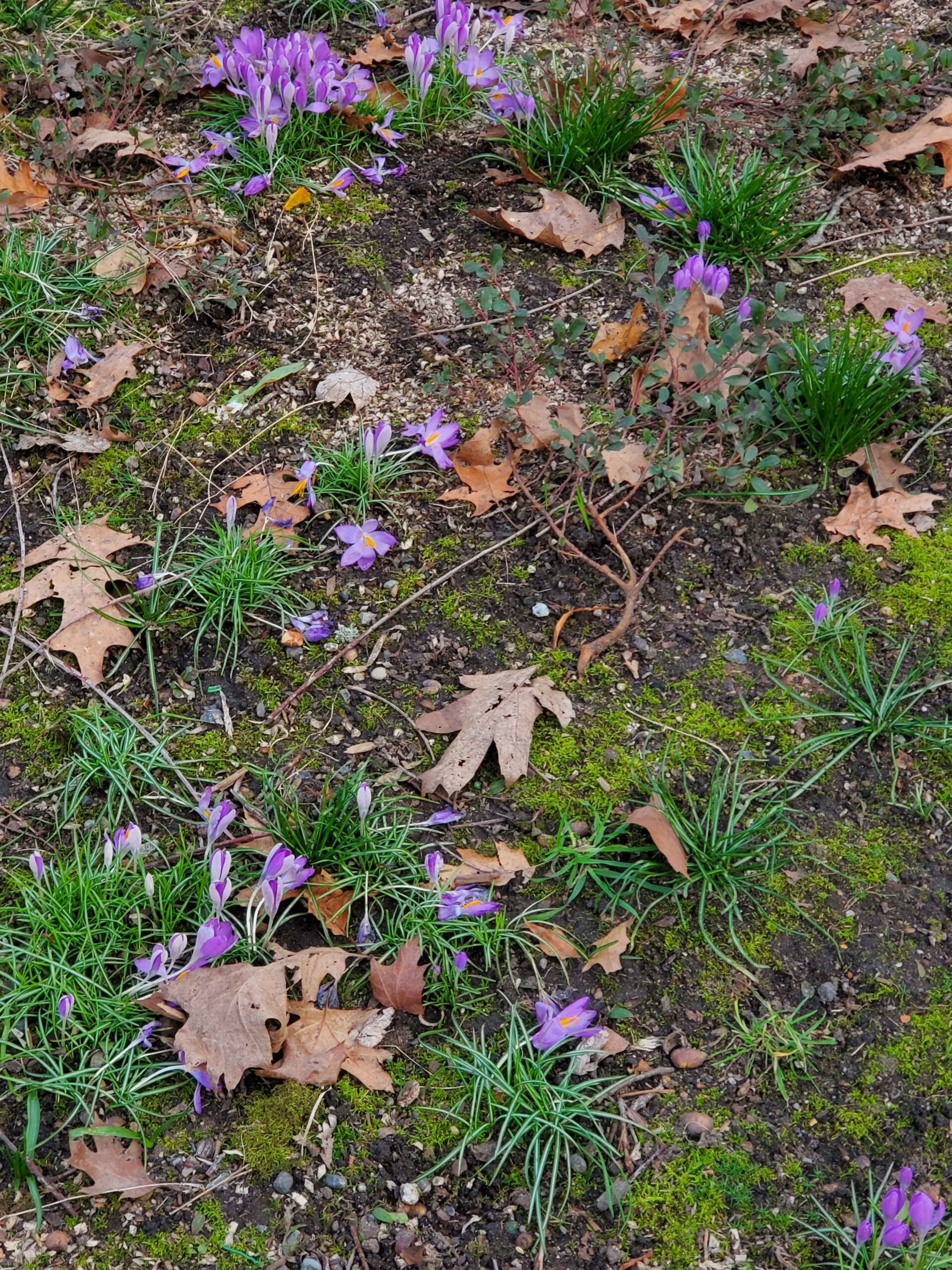
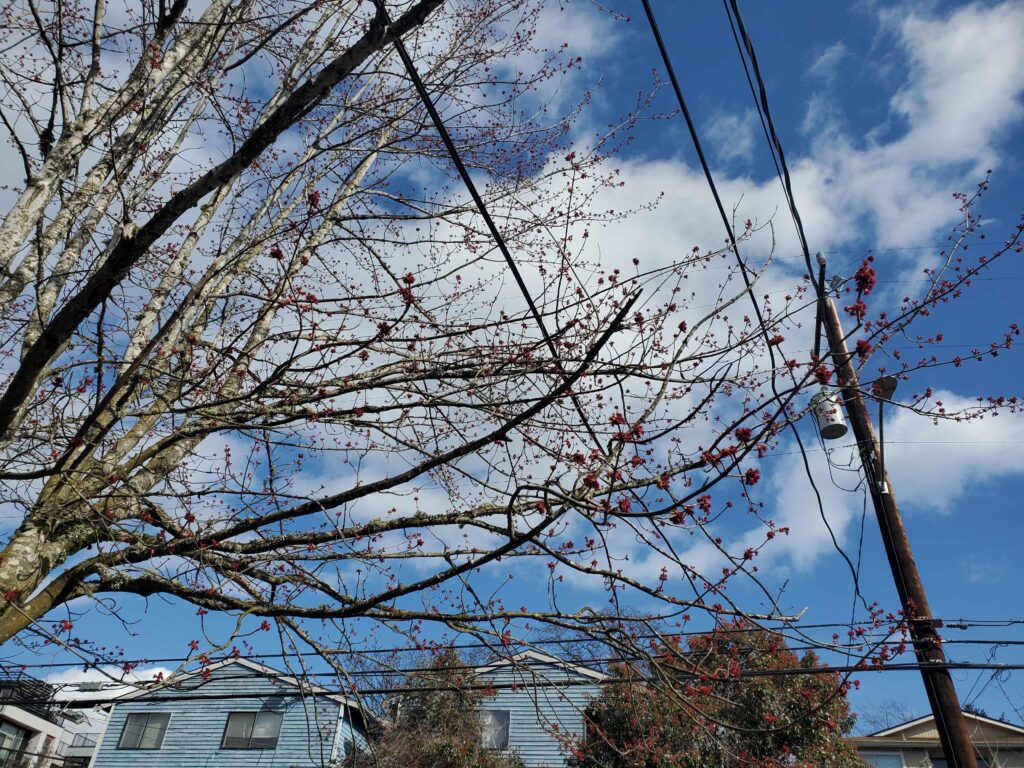
I saw, on a rainy day, the first tenuous blooms of an early Spring. Beside a sidewalk covered in mud and sodden leaf litter sprouted a patch of Crocuses, with their bulbs of violet petals just beginning to unfurl. I saw them and smiled the way one does at recognizing an old friend. They hold a special place in my heart, being so early to bloom, and each time I see them, I feel more connected to place and time, in which I had lost my footing, and, truly, I am grateful to them for that.
I took a photograph and went down the sidewalk again. I had not even made it to the next block before I remembered how precarious my balance was, that I was one false step away from falling. A thought came to me, unbidden, regarding that quiet moment of simple joy. I only smiled at the flower because I knew its name, and from that, I knew its significance. I began to glance around luridly, at the trees, the rows of houses, the raindrops dripping from the branches above me, the shadows of snow-capped mountains in the distance, and I felt sick with shame. How much around me do I fail to notice? How much of the world’s significance and tenderness do I stumble right past, totally ignorant? I looked down, at the gutter, and saw the carcass of a rat laying on its back, its incisors frozen in a grimace. Its innards spilled in listless, pink ribbons on its side, and they glistened too, damp with rain. My mind filled with fog at the sight, and I turned away.
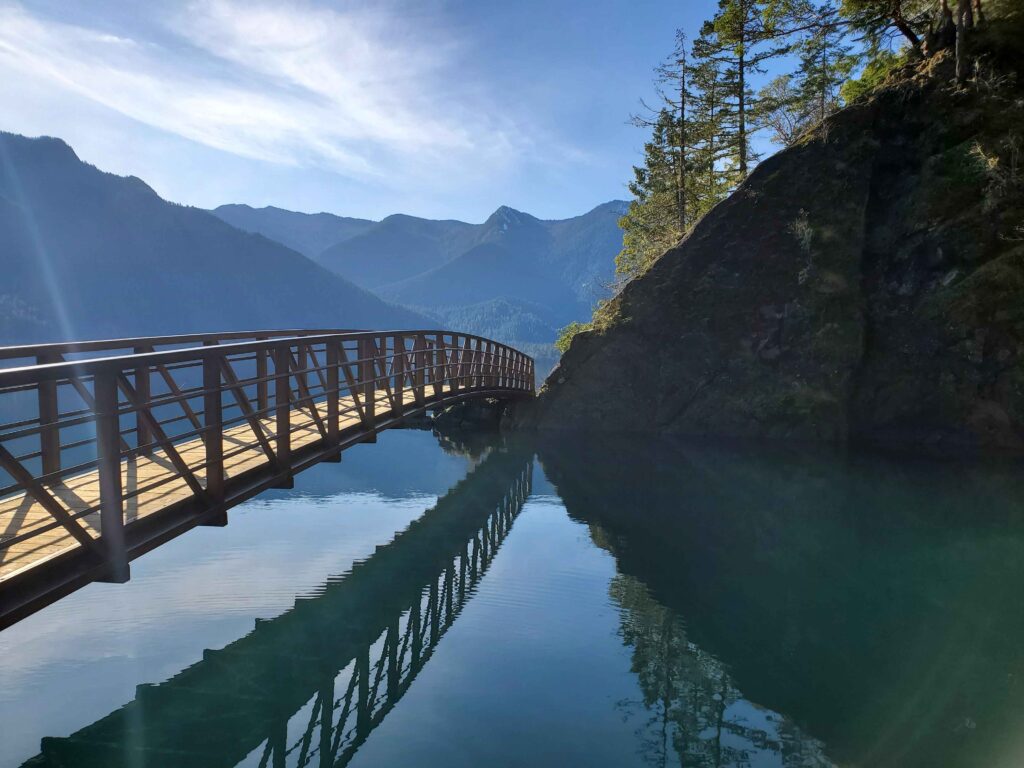
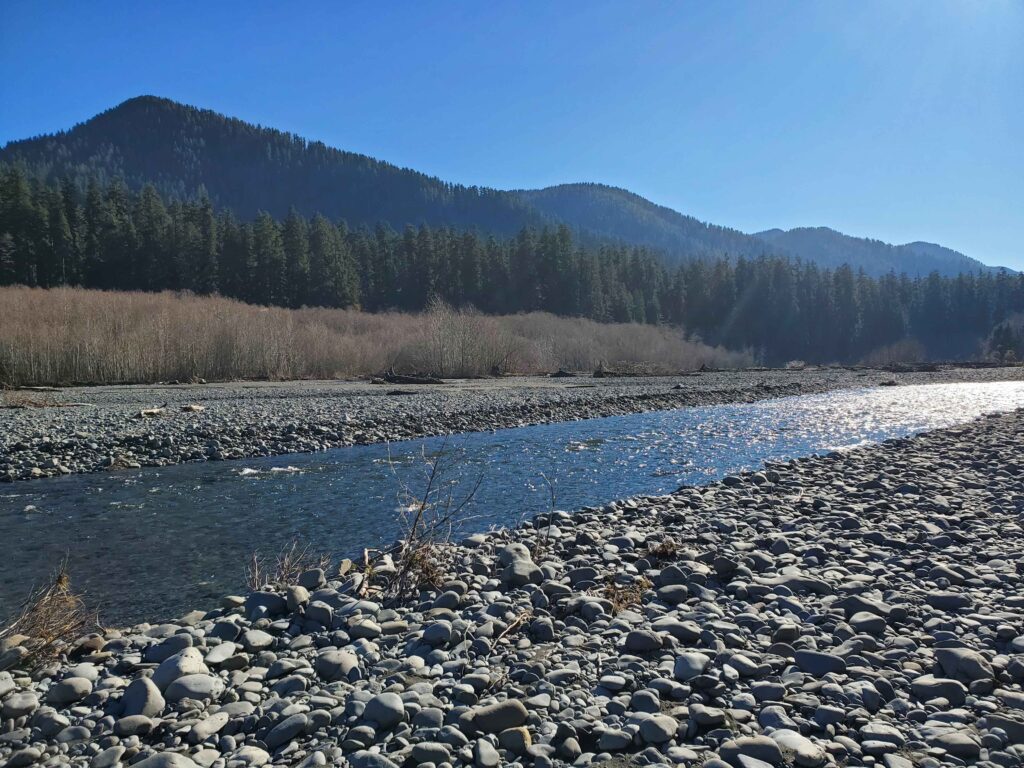
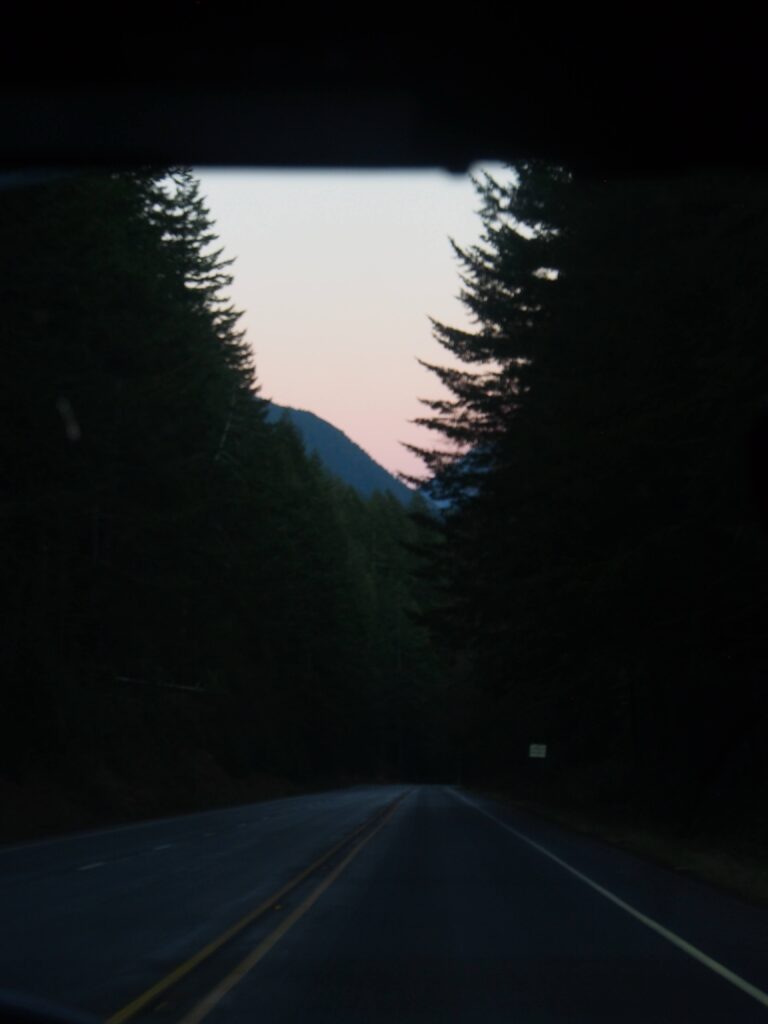
The following weekend, I was fortunate enough to make a trip to Olympic National Park here in Washington with a group of people whom I love dearly. We were extraordinarily lucky to have been blessed with uncharacteristically clear weather for this time of year, and the park is without a doubt one of the most beautiful places I have ever been to. Even the long drive across the peninsula to Port Angeles was beautiful. At all times, the road was flanked by some permutation of shimmering water, dramatic mountain peaks, and hills or fields of greenery—cedars, firs, hemlock, spruces, ferns, mosses, lichens—and the sun shining bright above it all. We stayed at Lake Crescent, whose aquamarine surface rests like a mirror at the base of Mount Storm King and betrays its depth with its serenity. The lake was carved out by glacial movements thousands of years ago alongside the neighboring Lake Sutherland, and it is likely the two formed together and were separated by an ancient landslide. One story from the Klallum tribe tells that this landslide was a result of Mount Storm King’s anger at the warring of the two tribes at his feet, and that he threw a boulder at them from above, crushing the warriors and cutting the lake in two. I like that story better.
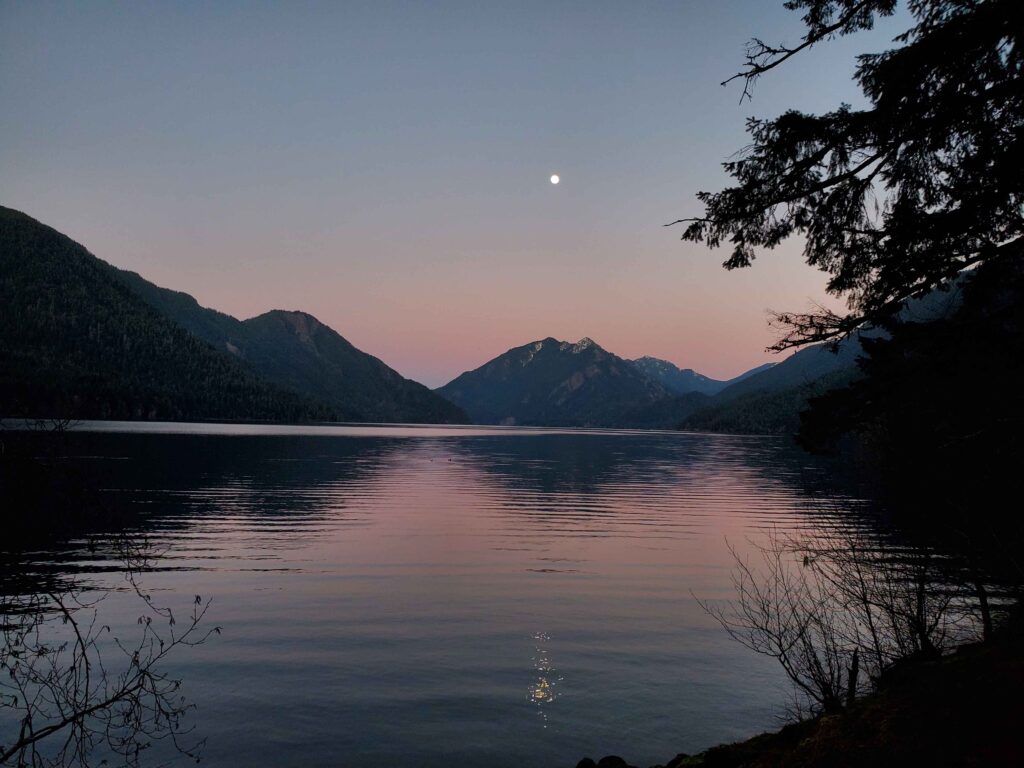
On our first night, the sky was free of clouds, and the lack of surrounding light pollution meant that the stars shone much clearer than they do in the city, though the moon, reaching fullness, dominated much of the heavens with its own luminescence. I am often frustrated with the moon’s insistence in such matters, especially on the rare clear night in the Pacific Northwest, but I was grateful to see this beside the lake, for its shifting surface captured the moonlight with such brilliant faithfulness that it appeared almost as shining sea foam as it lapped at the shore of moss and stone. Turning back to the sky, I spotted the Big Dipper rising above the shadowed mountains, and I smiled at how it reminded me of my grandfather who taught me to love the stars. I spun to find the Pleiades, who peered out at me from behind a needled canopy. I spotted Taurus and met the gaze of their fiery eye; I nodded in greeting to Castor and Pollux; I watched a satellite soar across the sky and vanish in an instant; and at seeing all this, my heart, guts, and soul were suddenly freed of the burden of their sickness, and I seized this brief moment of childish joy as quickly as I was able.
Long ago, when I was young, I spent part of my summers in rural Oregon visiting my grandparents. These trips were incredibly precious to me—they remain so, even though they are separated by time and the fallibility of memory—and the impressions they left upon my being carved the shape of my personhood like a glacier carves out a deep lake. Often, on a clear night, my grandfather would walk with me to the forest, taking a telescope. We would listen to old radio dramas, pick cherries from the trees and spit out the pits as far as we could into the darkness, and he would point the instrument at whatever planet he could find. It was here, squinting excitedly through an eyepiece, where I first developed my fondness for Saturn and its ostentatious rings, where I first saw the double band of the Milky Way, where I first began to regard the constellations as old friends.
Now, I went inside and retrieved a telescope. It was frigid outside, and the balcony began to freeze over. Nonetheless, with shaky, numb fingers, I fiddled with the tripod, aimed the viewfinder at the moon, and brought the eyepiece into focus until every detail of its cratered surface came in to perfect clarity. I marveled at it for a while before calling my friends outside to take a look.
We all took turns peering through the eyepiece, careful not to slip on the thin layer of ice. We shivered together and let out breaths of moonlit mist. I felt so much joy. I love the night sky. I want to thank it with tears in my eyes. I would kiss it if I could. It is an old, dear friend. It knew my grandfather, who loved it too, and every other person who once lived in this world and gazed up at it in awe, watching and wondering as it rolled by, just as I did now. I took off my glasses, and though the brilliance of the stars was no longer as clear as it was in my childhood, I still saw it. Even if I had to strain myself, I still saw it. It was still there—the same sky.
When we were done, I put the telescope away, and we all went to bed.
The following day was rather busy. We loaded up the car and drove to the Hoh Rainforest, one of the largest temperate rainforests in the contiguous United States. Perhaps surprisingly (it was to me), it is the wettest forest in that same region, receiving an average 140 inches of precipitation each year. This has allowed a variety of mosses, lichens, and ferns to thrive in it.
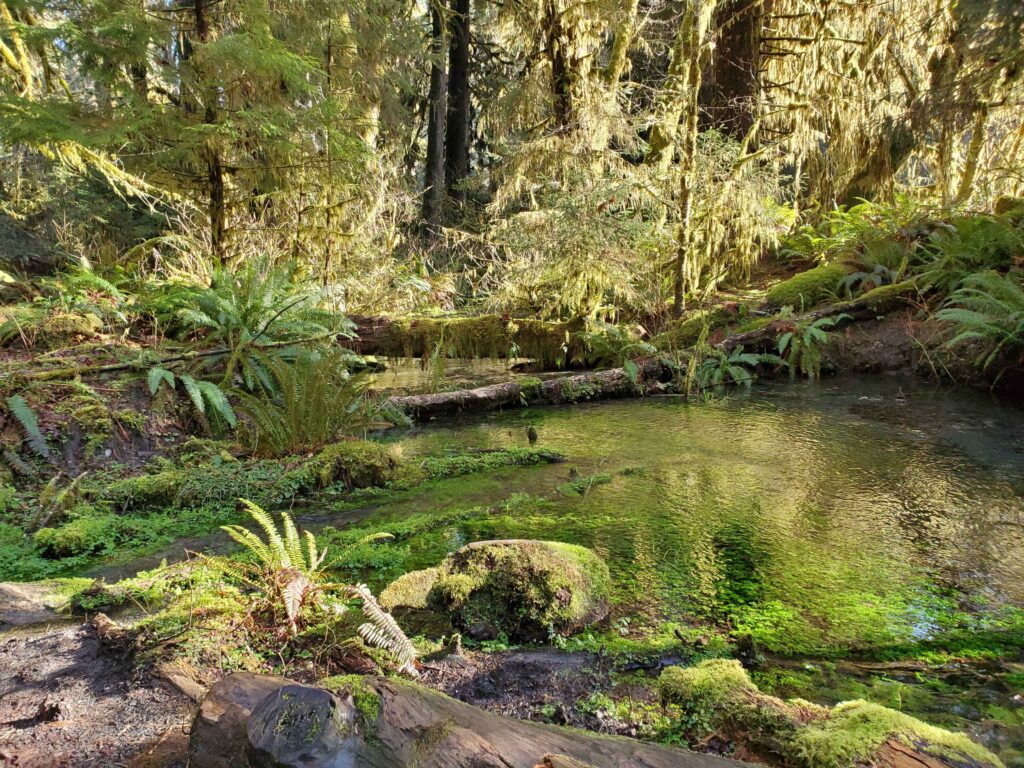
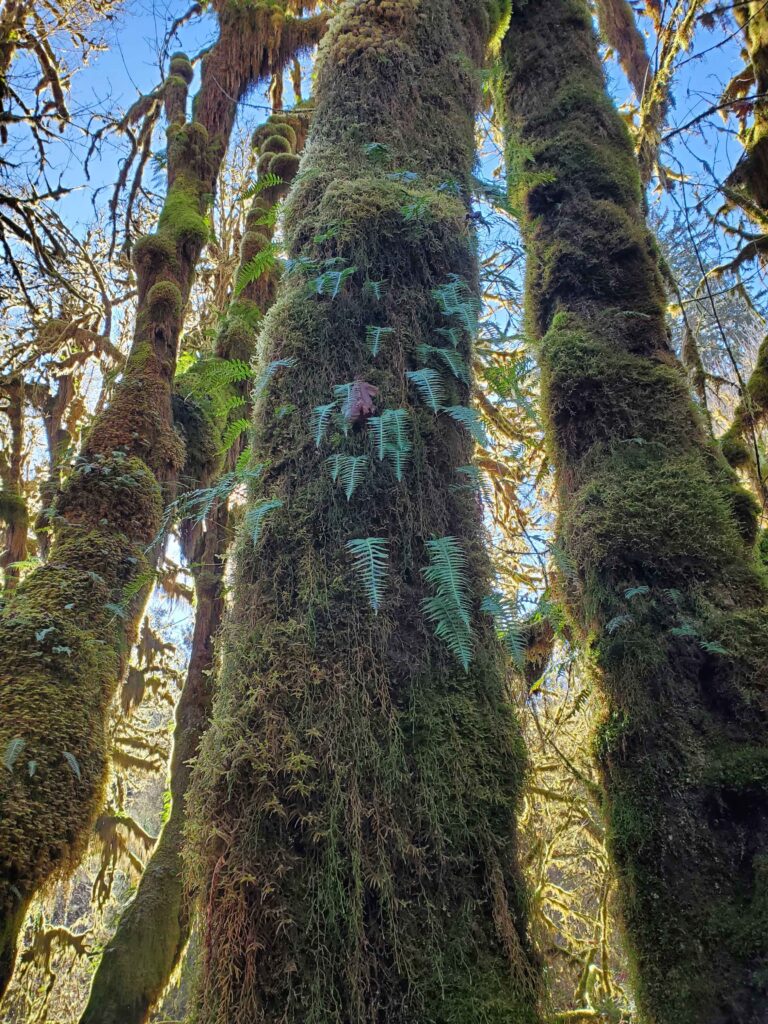
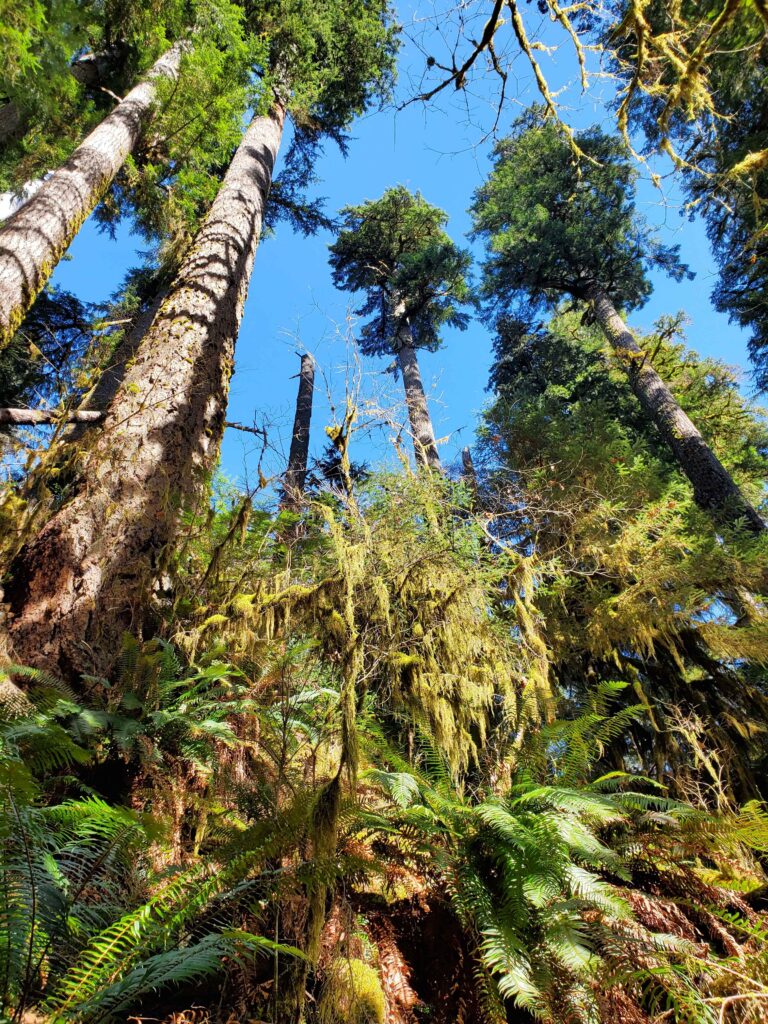
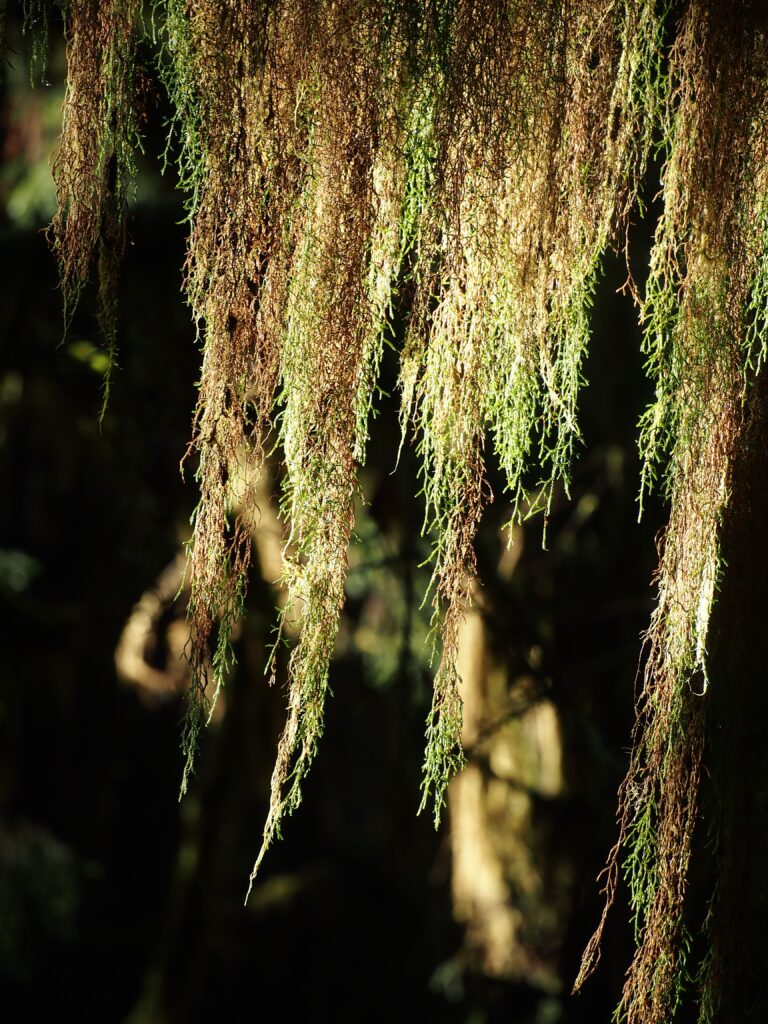
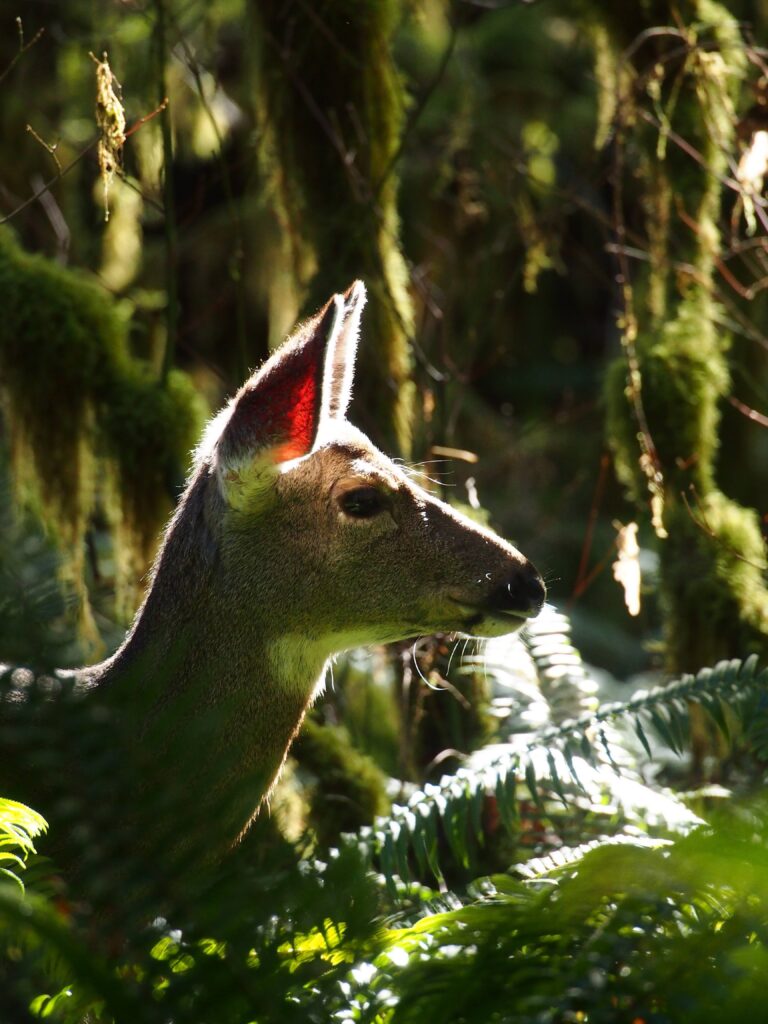
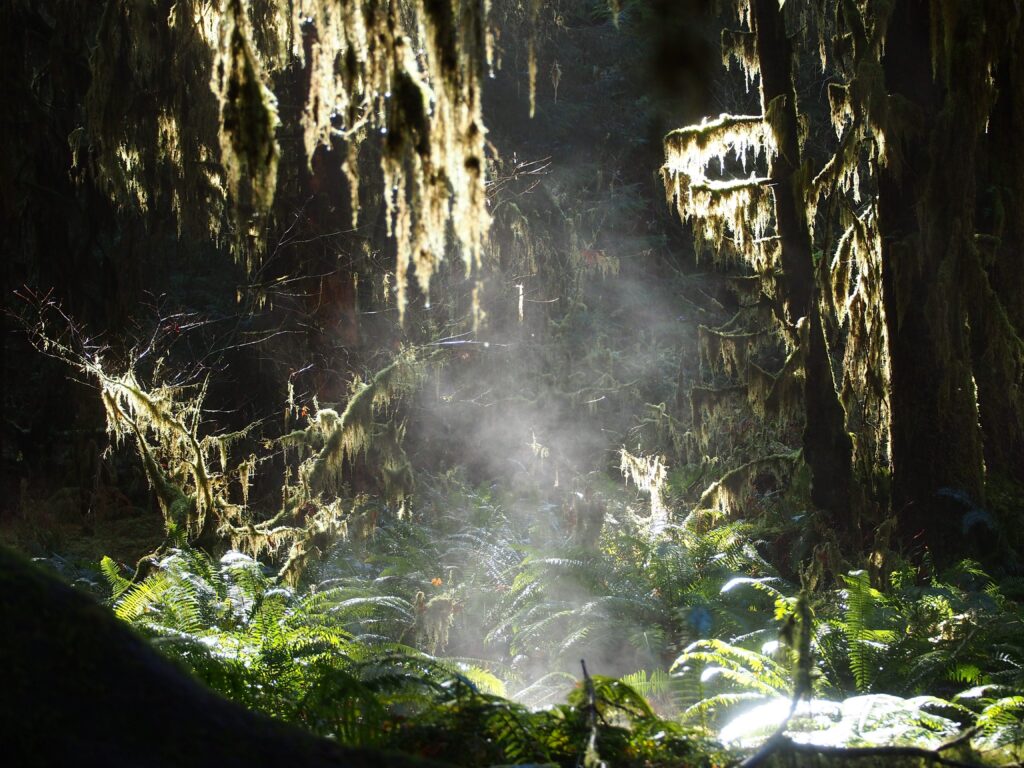
The day we arrived was clear, sunny, and rather warm (around 50F) for this time of year. The forest is shockingly green. The trees, mostly Sitka Spruce and Western Hemlock, tower hundreds of feet tall while mosses and lichens cling to their trunks and epiphytes. I even saw clusters of Sword Ferns growing out of the bark like a little green armory. The shorter trees slouch with branches that almost seem to droop from the weight of the spindly moss that hangs from them. And because of the unique weather during our visit, I witnessed a phenomenon that truly awed me. All around me, on the ground litter, in the ferns, in the branches, bushes, and bark, the forest was steaming. Clouds of mist drifted up from every square inch and shimmered in the sunlight that broke through the canopy in shafts. It was incredible, as if the forest was in the midst of releasing one, giant exhalation. I have to imagine it was moisture evaporating from the wet foliage in the warmth of the unexpected sunlight, but just like the formation of Lake Crescent, I prefer the other story. I breathed in, letting the scent of wet soil fill my nostrils, and exhaled deeply with the forest.
On our trip back to our lodgings, the car grew quiet from the day’s activity, and in the silence, my thoughts began to wander back to the images of Crocuses and roadkill. They blended together with the sights of the last few days, connecting to each other in a way I did not yet understand. I began to feel a familiar sickness as I struggled to push them down. After some time, we made a pit stop at Forks, and I pulled into the parking space outside the grocery store on the verge of senseless tears. I removed my seatbelt, and turning to open my door, I saw in the car in the space beside us, a little girl who was looking right at me with big, brown eyes. She smiled shyly and waved. I returned the gesture with a nonchalance that betrayed how moved I felt by this. What better pulls you out of yourself than to smile and greet a passing stranger?
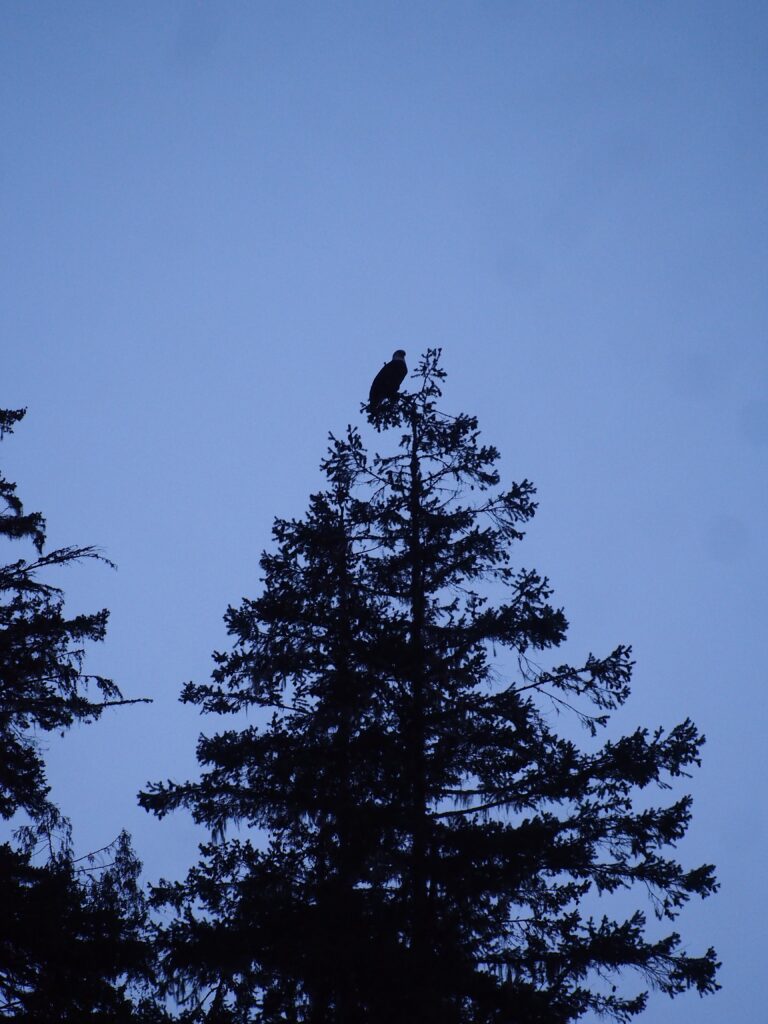
The sun was setting on the lake when we returned, staining the sky with such incredible hues of red, orange, and violet that it took my breath away. At my friend’s request, we pulled the car over onto the shoulder to stop and look a little while longer. I heard the shrill cry of a Bald Eagle, and recognizing it, immediately began scanning the surrounding trees. Sure enough, it perched atop a tree across the road from us, appearing a shadow in the fading light of twilight. It let out another call before diving across the lake and vanishing in the trees that rose from its opposite bank. The moon rose over the mountains, and I thought, “Would I have noticed the eagle if I had not known the sound of its cry?” I had no answer.
We spent the following morning at the lake. I went on a hike with one of my friends on a nearby trail. Birds sang in the trees, and after listening to them in silence for some time, I reflected, “It’s strange to think that there was a time where birdsong did not exist. It seems so fundamental to me—like a law of the universe.” My friend listened, thought for a moment, and then replied, “True, but that probably doesn’t matter much to the birds. A crow can’t conceptualize what it could be missing, for example.”
Two Spotted Towhees continued to sing at each other from somewhere deep in the foliage. I listened to them and thought about what my friend said, and I came to the conclusion that I disagreed. A crow can conceptualize what it could be missing—any living thing can—why else would life struggle so desperately for its own preservation if it did not possess, however unconscious or rudimentary, some understanding of the possibility of its death, or put another way, some conceptualization of the possibility that its life could be missing. It is likely that I have merely misunderstood my friend’s meaning, but nonetheless, this is the thought that settled in my mind: perhaps what makes us human is our capacity for conceptualizing what is missing. Other organisms are capable of it, but we are uniquely suited to it. It is our vocation that follows from our basest nature. All living things suffer—we are only better at articulating it.
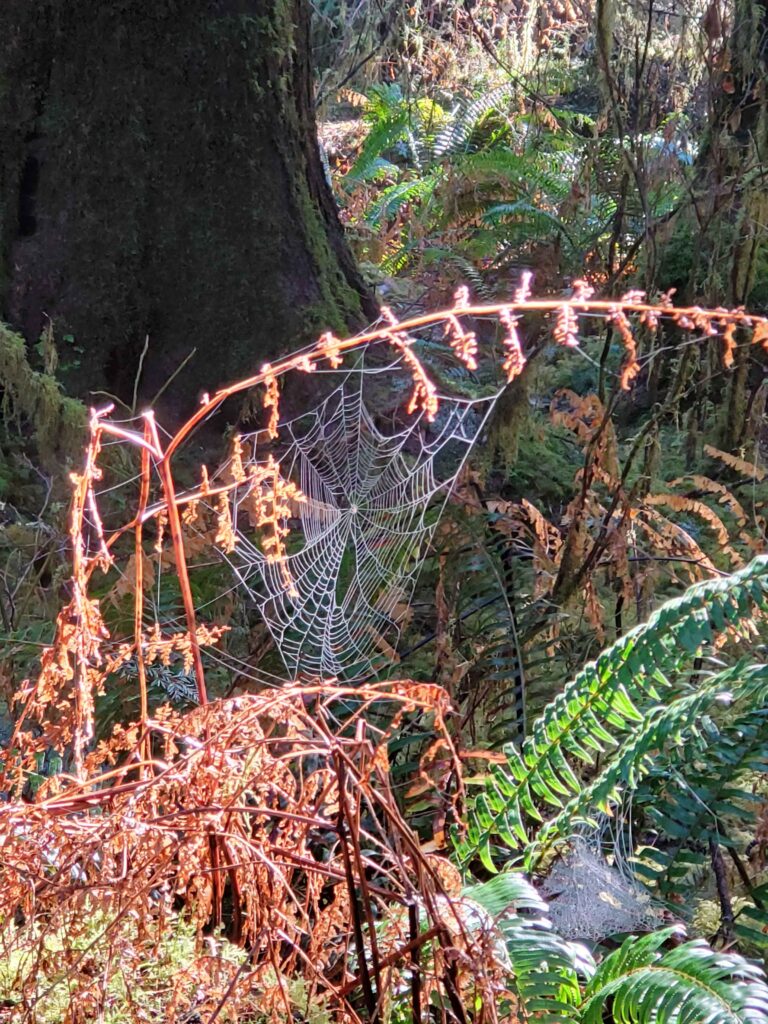
We continued our hike in silence, eventually passing a steep slope of scree. I commented how, if I were 12 years old again, I would have seen that as the perfect thing to climb up. My friend laughed, said, “When did we stop being 12 years old?” and immediately rushed up the slope. I followed behind him, and we made our own footholds from the loose dirt that compressed beneath our steps while we clambered, practically on all fours, to the top. We arrived decidedly out of breath, then sat down together beneath the sheer face of sediment that dripped rocks like raindrops, and we looked up at the roots of the trees that stuck out and cradled spiderwebs. We sat like little kids and took deep, rapid breaths, still laughing hoarsely, and when our strength returned, we sat beside each other in silence and gazed out above the trees, toward the lake and the mountains that surrounded it. When that was done, we carefully rose, stumbling our way down, almost surfing on the flow of loose dirt, until we had made it to solid enough ground to break into a sprint down the remainder of the hill. We patted off the dust from our butts, legs, and shoes, and made our way back.
The remainder of our time there was spent childishly. We worked up the courage, which bordered on mass hysteria, to jump into the freezing lake together. We rushed out to the dock, already screaming and shivering and bouncing from foot to foot as they ached from the cold. And so like a group of little idiots, we held each others’ hands, counted to three, and leapt into the water in unison. I remember the shock of the cold, the simultaneous shrieks and laughter, the desperate floundering as we pulled ourselves out of the water, and the final, lunatic rush for our scattered towels. With that, our trip was over. We patted ourselves dry, changed back into our clothes, packed up, and left to return home.
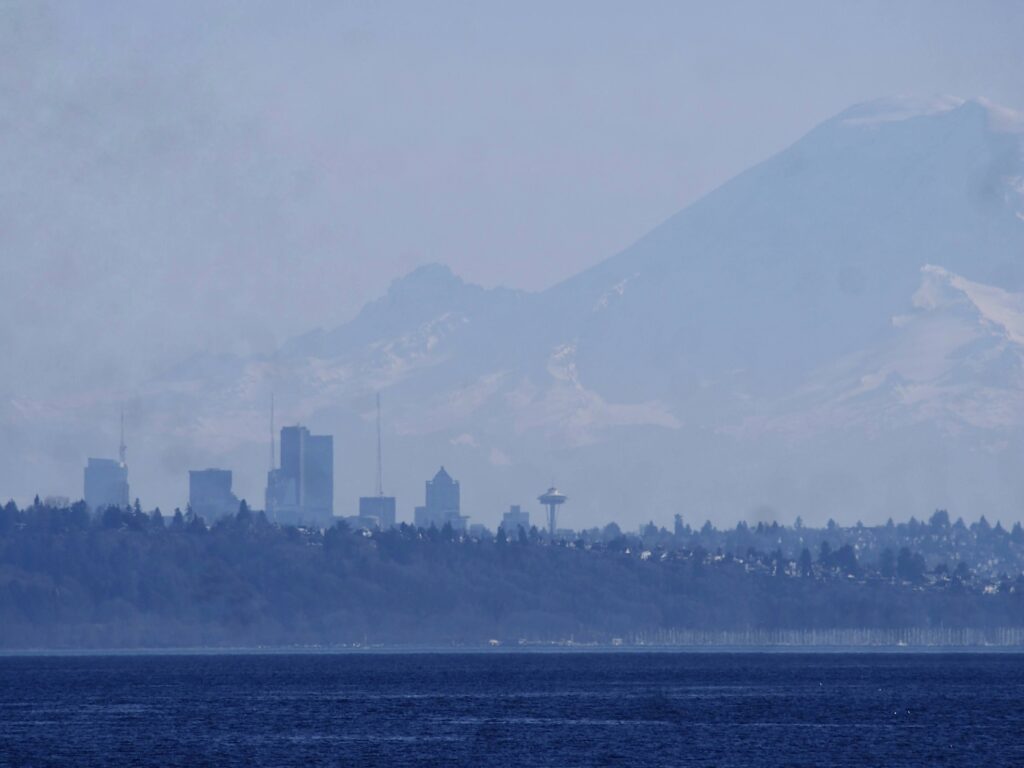
On the return trip, we took the ferry from Kingston to Edmonds, as we were told that one had the prettiest view. While waiting for it to leave, I stopped by a little restaurant in town and bought a cottage pie from a friendly British man. I shared it with a friend, and he even gave us an extra croissant so we “wouldn’t fight over it.” When we were on the ferry, I saw Seattle in the distance, across the Sound, as Mount Rainier towered behind it. I saw a petrel taking a rest on a piece of driftwood. I saw my friends goof around, pretending to be Jack and Rose at the prow of the Titantic, while I held my hat down so it would not blow away in the wind. Home was just another half an hour down the I-5.
That was a week ago, as of me writing this. It was a much-needed break from things. I am mistrustful of routines, they make me lazy and require frequent disruption for my own good. I destroy myself through routine, and it is telling of the general state of things how quickly I slipped back into it after returning home.
I am growing frustrated with my inability to describe the illness I have been stricken with. It is a kind of spiritual sickness, and having never considered myself a spiritual person, I find it difficult to understand. Nonetheless, I will attempt to describe it here and hope that I will stumble into something coherent.
To begin metaphorically, I have chosen to open my heart, something I have never truly allowed myself to do, and because I have opened it, I am bleeding. An artery in my soul has been severed and sticky, crimson blood is spewing out from the wound. Its reeking metallic stench makes me ill. I’m lightheaded and struggling to stand. If I don’t stop it, I will die.
Now, more directly: I have continued to work in behavioral health for over half a year now. I work with clients who struggle with serious mental illness and substance use disorder, and in coming to know them, I have inevitably come to love them. Yes, they are my clients, and I understand the requisite clinical distance that is required to best serve them. I still love them. I love them with my heart and my guts. It’s quite a visceral feeling. I have opened my heart to them as a fellow sufferer, and in doing so, I have taken a little peek behind the curtain of my own privilege and seen what monstrous thing slouches out of view. It isn’t even trying to hide anymore. It destroys all that is tender and sweet with glee. It gloats at those who weep at its cruelty. It wants you to know it has power over you, that it will hurt you and everyone you love with it—and it does. I see how it destroys the people I love and I grow so angry that my whole body trembles. Where is the justice? If only there were justice, then perhaps this would be tolerable, my despair would have somewhere to flow to, some resolution to reach, but there is no justice, only pain.
What I have come to understand is how little I understand about anything. I have lost my faith in people and in justice in just the same way I lost my faith in my God, long ago. I believe in the sublimity of love and forgiveness, but I do not want to forgive them. I don’t dare to. These horrors do not happen in isolation—they are a result of a sick society, of a culture that is rotten to its roots. Why do the little ones suffer? Because of us. There is no solution but to tear it out and start anew, is there? What am I to do? I’m bleeding. What can I do? Am I betraying myself? I do not know. I don’t know anything at all.
It was a rainy day today. I walked down the sidewalk, where the Crocuses bloomed. I looked for their familiar, violet petals, but they were gone. Something or someone had trampled over them. The blossoms lay on their sides, like corpses, with some torn at the stem and tossed into the gutter. I stopped, stared like an idiot, my breaths became shallow, and I began to cry. I looked further up the street and saw the rat carcass slumped over in the same spot where it continued to rot. Perhaps I am merely going mad, but I thought I could smell it from where I stood.
I went home in a kind of delirium, crying like a little child, and thinking, over and over, “I am destroying myself. I am destroying myself. I know nothing but that I am destroying myself.”
I love the world and everything in it. The child who stared up at the stars, clambered up hills, and leapt into lakes is the same one who cries now. The world is so unfathomably beautiful that I am disgusted in shame just by thinking I might have failed to notice it or consider it all a friend. I am so grateful to live in a world of flowers, birds, and mountains. What an incredible gift! There could be no greater sin than to squander it, and yet, right now, I don’t want to live anymore, not because I am running away from pain, but because I have run straight into it. No—that isn’t quite right. I want to live—more than anything, I want to live—but I do not want to live in a world that I must share with the people I cannot forgive. But this world, so full of misery and evil, is the same world I share with my friends who I love more than life itself, and I would not dare reject that!
And so I wonder, what am I to do? I could drink until my brain softens into mud that steams in the sunlight, and while it would certainly help me feel better, for a moment, it will get me no closer to the resolution I seek to save myself with. Instead, I will think of the crows and all other living things, who might lack the ability to conceptualize the gift of their life with such meticulous precision, but who nonetheless understand its preciousness. Perhaps that is what faith is: choosing to honor a gift you will never understand.
I ask the birds to forgive me for my stumbling and my foolishness. I ask all my friends for their forgiveness every time I, alone, fail to notice them. May the mountain cast down its boulder at me, but forgive me! I am ashamed, but every misplaced step I take is spent blindly striving toward something I do not understand, yet know to be infinitely precious.
I can now answer my question at the lake. Would I have noticed the eagle if I had not known the sound of its cry? Yes. It would be a stranger to me, but still, I would search for it amidst the trees. I would not know its name, but still, I would smile to it in greeting. I would wave. A little girl taught me that.
I am blind, but I will live with my eyes open. I am deaf, but I will listen. I am numb, but I will feel. I suspect, with some presentiment, that I will never find an answer to the questions that haunt me. It makes no difference. I will search for it all the same. I will not betray myself, even if it destroys me. I will live my life stumbling with an outstretched hand. That is a life well spent!
I hold a belief I know to be foolish, but it provides me with some strange comfort, so I hold it nonetheless. It first occurred to me as a child, when I noticed the arrival of the Western Bluebirds in early spring and began to wonder—when the days lengthen and the air begins to warm, what compels the birds to begin their arduous journey and the flowers to reach toward them with petals splayed? In response, I formulated a childish theory, which I confess to you with a little giggle, but know that I still hold this belief with the deepest reverence, and it goes something like this: I believe that these beings must be spurred by some strong, inexplicable feeling, a deep, formless longing that bubbles up, resonant, from their bones and their roots and their guts, and the sensation this irrepressible mystery most closely resembles is pain.
Yet there is the Bluebird perched on my mailbox; there is the Crocus, trampled, but its roots remain.
There I am, with all my gratitude and shame, still here.

Leave a Reply